<?xml version="1.0" encoding="UTF-8"?>
<feed xmlns="http://www.w3.org/2005/Atom">
  <title type="text">Georgia Journeys</title>
  <updated>2026-11-22T15:19:54+00:00</updated>
  <generator uri="http://framework.zend.com" version="1.12.20">Zend_Feed_Writer</generator>
  <link rel="alternate" type="text/html" href="https://georgiajourneys.kennesaw.edu/"/>
  <link rel="self" type="application/atom+xml" href="https://georgiajourneys.kennesaw.edu/items/browse?output=rss2"/>
  <id>https://georgiajourneys.kennesaw.edu/</id>
  <author>
    <name>Georgia Journeys</name>
    <uri>https://georgiajourneys.kennesaw.edu</uri>
  </author>
  <link rel="hub" href="http://pubsubhubbub.appspot.com/"/>
  <entry>
    <title type="html"><![CDATA[Settling in Georgia: Business Expansion]]></title>
    <summary type="html"><![CDATA[<p><strong><em><span class="TextRun SCXW149844636 BCX0"><span class="NormalTextRun SCXW149844636 BCX0">"One thing led to another</span><span class="NormalTextRun SCXW149844636 BCX0">.”</span></span><span class="EOP SCXW149844636 BCX0"> </span></em></strong></p><img src="https://georgiajourneys.kennesaw.edu/files/fullsize/20ad60e2aa352caa81f3ecf3fd9fe62c.jpg" alt="Margol Family Passover Seder" /><br/><p><span>"On Saturdays and Sundays, I would go door to door, selling housewares: linens, bed linens, blankets, silverware, pots and pans, aluminum pots and pans, credit, etc.</span><span> So, by the time we graduated college, I dreamed of going to Wharton School of Finance, University of Pennsylvania, getting master's degrees and becoming CPAs. We threw all that aside and said, 'we got a business already.' So that's what we did, back home, we spent our time developing and increasing the size of the business. </p><p>We ended up getting into the furniture business. </span><span>We formed a partnership to expand and open more furniture stores. So, after we opened Indianapolis, Indiana, together, we decided to open a furniture store in Atlanta, Georgia.  That's how we ended up with a furniture store in Atlanta, Georgia. One thing led to another. My twin brother Howard first decided to move his family to Atlanta for him to manage the business.  Now, as that store was doing extremely well, and the managers we had couldn't handle it. Then as we expanded further, I used to go to Atlanta and spend two weeks at a time in that store, and back to Jacksonville. And then we went up to another totally different partnership that was quite different. And then I decided, 'better move my wife and my mother-in-law to Atlanta.' </p><p>That’s how we ended up [in Georgia] for business reasons. We opened up additional furniture stores and another business selling mattresses from temporary locations.”</span><span> </p>
<span> </span></p><p><em><strong><a href="https://georgiajourneys.kennesaw.edu/items/show/600">For more (including 2 images) view the original article</a></strong></em></p>]]></summary>
    <published>2024-06-25T19:59:27+00:00</published>
    <updated>2024-07-18T19:55:16+00:00</updated>
    <link rel="alternate" type="text/html" href="https://georgiajourneys.kennesaw.edu/items/show/600"/>
    <id>https://georgiajourneys.kennesaw.edu/items/show/600</id>
    <author>
      <name>Hilbert Margol</name>
    </author>
  </entry>
  <entry>
    <title type="html"><![CDATA[Faith and Antisemitism: Upholding Tradition]]></title>
    <summary type="html"><![CDATA[<p><strong><em><span class="TextRun SCXW143317525 BCX0"><span class="NormalTextRun SCXW143317525 BCX0">“</span><span class="NormalTextRun SCXW143317525 BCX0">She said, when </span><span class="NormalTextRun SCXW143317525 BCX0">you’re</span><span class="NormalTextRun SCXW143317525 BCX0"> walking, just remember, you do not </span><span class="NormalTextRun SCXW143317525 BCX0">represent</span><span class="NormalTextRun SCXW143317525 BCX0"> only yourself</span><span class="NormalTextRun SCXW143317525 BCX0">, but you </span><span class="NormalTextRun SCXW143317525 BCX0">represent</span><span class="NormalTextRun SCXW143317525 BCX0"> all Jewish people in the area. Because if you do something wrong, </span><span class="NormalTextRun SCXW143317525 BCX0">it’s</span><span class="NormalTextRun SCXW143317525 BCX0"> going to </span><span class="NormalTextRun AdvancedProofingIssueV2Themed SCXW143317525 BCX0">be a reflection of</span><span class="NormalTextRun SCXW143317525 BCX0"> not only you</span><span class="NormalTextRun SCXW143317525 BCX0">, but all the Jewish neighbors</span><span class="NormalTextRun SCXW143317525 BCX0">.”</span></span><span class="EOP SCXW143317525 BCX0"> </span></em></strong></p><img src="https://georgiajourneys.kennesaw.edu/files/fullsize/49da8f8b5729b1f2d363b07ed320c93c.jpg" alt="Close-up of Howard and Hilbert Margol at their bar mitzvah" /><br/><p><span>“</span><span>Yes! My family was very Jewish. Although my father had the highest Jewish education, he graduated from one of the finest religious schools in Europe called the Yeshiva. But, for business reasons, except for the high holidays, that’s the only time he would close the store</span><span>.”  </span><span> </span>
<span>“Well, we knew antisemitism existed.  When we were six or seven years old, we moved to a different neighborhood with the rest of the majority of Jewish families. And it was a mixed neighborhood.  Most of the non-Jewish homeowners and renters were Southern Baptists. But everybody seemed to get along fine. So, [we] never experienced anything antisemitic in that neighborhood that I remember. And there were reasons for it, because we lived close to the synagogue, and had there been, there would have been some kind of activity in that neighborhood, but it wasn't. My twin brother and my best friend, Clayton Johnston, his family was not Jewish. His father, especially, was a very nice, but hard on his children type father. And he let it be known that he would not put up with anything that resembled antisemitism.  He had a dry-cleaning agency, he had a lot of Jewish customers, and maybe that was a reason why it was a great experience. One thing our mother reminded us that I remember very well, and she told my older brother and myself and my twin brother, that when we were out and about, we would go downtown on Saturday to a movie. She said, 'when you're walking, just remember, you do not represent only yourself, but you represent all Jewish people in the area. </span><span> </span>
<span>Because if you do something wrong, it's going to be a reflection not only on you, but all the Jewish neighbors as well. We were always on our best behavior anyway, but that reinforced, the way we conducted ourselves.'”</span><span> </span></p><p><em><strong><a href="https://georgiajourneys.kennesaw.edu/items/show/589">For more (including 2 images) view the original article</a></strong></em></p>]]></summary>
    <published>2024-06-24T18:19:55+00:00</published>
    <updated>2024-07-18T19:05:50+00:00</updated>
    <link rel="alternate" type="text/html" href="https://georgiajourneys.kennesaw.edu/items/show/589"/>
    <id>https://georgiajourneys.kennesaw.edu/items/show/589</id>
    <author>
      <name>Hilbert Margol</name>
    </author>
  </entry>
  <entry>
    <title type="html"><![CDATA[A Sense of Community: Jim Crow in Jacksonville, Florida]]></title>
    <summary type="html"><![CDATA[<p><strong><em>“The first professional baseball game I ever saw was between two Black teams. My father, coming from Lithuania, didn’t know baseball from beans.”  </em></strong></p><img src="https://georgiajourneys.kennesaw.edu/files/fullsize/26956e6dedfb595cd6d3d555475e14ef.jpg" alt="Jacksonville Red Caps" /><br/><p><span>“Well, my father ended up as a peddler selling ladies dresses. And from that, he made enough money to open a small clothing store in the Black business district in Jacksonville.”</span><span> </span>
<span>“Yes, we actually became aware and acquainted with some Black business owners and stores, especially across the street from my father’s store, Anderson’s Smoke Shop. He sold every kind of tobacco products. So my father would do his tax return every year. In return, he would pay my father with cans of tobacco for his pipes and a box of King Edward cigars. My father never smoked cigarettes, always his pipe and cigar. Next door was Vandora Jackson’s Café and Bakery, and I remember both of them very well.” </span><span> </span>
<span>“The first professional baseball game I ever saw was between two Black teams. My father, coming from Lithuania, didn’t know baseball from beans. But Mr. Anderson gave him some tickets to some of the games. So that’s how my father got introduced to baseball and became a baseball fan. So, we sympathized, and we understood the situation with Black families.” </span><span> </span></p><p><em><strong><a href="https://georgiajourneys.kennesaw.edu/items/show/588">For more view the original article</a></strong></em></p>]]></summary>
    <published>2024-06-24T18:07:45+00:00</published>
    <updated>2024-07-18T19:02:20+00:00</updated>
    <link rel="alternate" type="text/html" href="https://georgiajourneys.kennesaw.edu/items/show/588"/>
    <id>https://georgiajourneys.kennesaw.edu/items/show/588</id>
    <author>
      <name>Hilbert Margol</name>
    </author>
  </entry>
  <entry>
    <title type="html"><![CDATA[B-29 Radio Operator<br />
: Embracing a Crucial Role<br />
]]></title>
    <summary type="html"><![CDATA[<p><strong><em><span style="font-weight:400;">"We were completely in the dark." </span></em></strong></p><img src="https://georgiajourneys.kennesaw.edu/files/fullsize/c569d10b896b063f8bc5dc80bac179bd.jpg" alt="B-29 Schematic" /><br/><p>“We were completely in the dark. We had no idea how we progressed from step to step. The first time I saw a B-29 was in Pyote, Texas. I had no idea where B-29s were stationed, but of course, it's a bomber, and apparently, it was being used somewhere in the war. Our crew was assembled then, and I feel I was one of the lucky ones. Our captain, I mean, our pilot, also called the airplane commander, was from Fort Worth, Texas. The co-pilot was actually called the pilot as well. Then there was the flight engineer, responsible for monitoring the engines, hydraulics, and the plane's systems operating the bomb doors, landing gear, and everything else – a very important job. I'd never seen anything like this plane. It was massive, and the size of the propellers was almost unbelievable. As for the inside, it wasn't too crowded compared to other, smaller bombers I'd been in. There was plenty of room, though the crew was almost shoulder-to-shoulder, especially the navigator and I, who corresponded constantly.”</p><p><em><strong><a href="https://georgiajourneys.kennesaw.edu/items/show/576">For more (including 2 images) view the original article</a></strong></em></p>]]></summary>
    <published>2024-05-24T17:47:48+00:00</published>
    <updated>2024-05-31T20:54:30+00:00</updated>
    <link rel="alternate" type="text/html" href="https://georgiajourneys.kennesaw.edu/items/show/576"/>
    <id>https://georgiajourneys.kennesaw.edu/items/show/576</id>
    <author>
      <name>Melvin Price</name>
    </author>
  </entry>
  <entry>
    <title type="html"><![CDATA[Learning Morse Code<br />
: A Challenge Accepted<br />
]]></title>
    <summary type="html"><![CDATA[<p><strong><em><span style="font-weight:400;">"We started identifying dots and dashes. We began at four words per minute.”</span></em></strong></p><img src="https://georgiajourneys.kennesaw.edu/files/fullsize/f229bd83035d215a27248cedf72e32f2.jpg" alt="Learning Wartime Lines
" /><br/><p><span style="font-weight:400;">“My knowledge of Morse code was basic – just dots and dashes. I didn't know what specific combinations meant and the only distress signal I recognized, was SOS: three dots, three dashes, three dots. That is the only thing I knew. But as far as all the alphabets, I had no idea. </span>
<span style="font-weight:400;">During testing, they showed us two similar signals and asked us to identify them as 'yes' or 'no' based on how alike they sounded. This went on for quite some time. … Ultimately, none of the other soldiers got picked for cadet training. Those with the highest scores were sent to radio operator school.  Those with popular scores were sent to gunnery schools or possibly any other area of service.</span>
<span style="font-weight:400;">From Biloxi, Mississippi, I was told I was going to radio school. We went to Sioux Falls, South Dakota, in the wintertime. There, in classrooms, we started identifying dots and dashes. We began at four words per minute. They would send out dots and dashes. Well before that, we were told: three dashes would be an O, and an A would be a dot and a dash, and so on. But everything was very close, especially the dots. For example, H was four dots. Hearing three dots followed by four dots was very difficult to decipher. We started at four words per minute and gradually built our classroom speed to maybe 15, to 20 words per minute. There were three instructors and they were civilians and extremely good people. They wanted to impress this skill upon us. My understanding is that younger people pick up new skills more readily than someone, say, 30 years old. This holds true even today. So, after struggling at four words per minute, there's no way I thought I could ever do this. The goal was to reach 25 words per minute.”</span>
<i><span style="font-weight:400;">Editor's note: World War II saw Sioux Falls, South Dakota, play a significant role in the U.S. Army Air Forces' (AAF) training efforts. Established in 1942 and operational until 1945, the AAF Technical School trained a substantial number of radio operator-mechanics (ROMs). These ROMs played a crucial role in ensuring clear and reliable communication between aircraft, ground control, and other military units during the war. The school's presence significantly impacted Sioux Falls, a previously agrarian community. The influx of trainees and staff, exceeding 45,000 at its peak, necessitated rapid urban development and positively impacted the local economy.</span></i></p><p><em><strong><a href="https://georgiajourneys.kennesaw.edu/items/show/574">For more view the original article</a></strong></em></p>]]></summary>
    <published>2024-05-24T17:37:07+00:00</published>
    <updated>2024-05-31T20:50:23+00:00</updated>
    <link rel="alternate" type="text/html" href="https://georgiajourneys.kennesaw.edu/items/show/574"/>
    <id>https://georgiajourneys.kennesaw.edu/items/show/574</id>
    <author>
      <name>Melvin Price</name>
    </author>
  </entry>
  <entry>
    <title type="html"><![CDATA[Georgia on My Mind: Settling Down]]></title>
    <summary type="html"><![CDATA[<p><strong><em>"My mom used to call me &#039;Jackie Sunshine&#039; when I was a kid."</em></strong></p><img src="https://georgiajourneys.kennesaw.edu/files/fullsize/276e839ac2786c2a1daf2f1e0879bea2.jpg" alt="Portrait of Jackie Sherman" /><br/><p>“The year I turned 40, I realized that I was physically cold all the time. So I grew up in New York, I went to college in Boston, I went to graduate school in Michigan, a little bit of time in Africa – warm weather. I discovered I could live in warm weather and actually I quite liked being warm. </p><p>"So in my late 30s I discovered I have Raynaud’s which is a circulatory syndrome which made my hands and feet cold all the time and it was kind of causing me to physically contract. And so I started to think about you know where could I go or where could I live where I could really be able to be more relaxed and comfortable and have my body – a more sunny outlook if you will. Cause I think, you know my mom used to call me “Jackie Sunshine” when I was a kid, I had this bright yellow raincoat and I think you know I had a sunny side but as I got older and I got colder that really became difficult, and so I was looking for a warm place to live and I had a few criteria: I wanted it to be cosmopolitan because I liked museums and theater and things like that, I wanted there to be a good sized Jewish population, I wanted it to be warm, and I wanted to know at least one person, and my college roommate Cindy Smith lived here. </p><p>"And so by a process of elimination, I guess I had an unwritten criteria that I wanted to be relatively, you know, on the same coast as my family. So, that’s what brought me to Atlanta.” </p><p>Editor’s Note: Jackie Sherman moved to Atlanta in 1994. She started her own consulting firm, The Jackie Sherman Group, in 1999, with a focus on strategic planning, staff and board development, capacity and community engagement for nonprofit organizations. She has served on the board of various arts and educational organization throughout the city as well as her synagogue, Congregation Bet Haverim.</p><p><em><strong><a href="https://georgiajourneys.kennesaw.edu/items/show/557">For more view the original article</a></strong></em></p>]]></summary>
    <published>2023-04-26T18:26:42+00:00</published>
    <updated>2023-06-07T15:53:45+00:00</updated>
    <link rel="alternate" type="text/html" href="https://georgiajourneys.kennesaw.edu/items/show/557"/>
    <id>https://georgiajourneys.kennesaw.edu/items/show/557</id>
    <author>
      <name>Jackie Sherman</name>
    </author>
  </entry>
  <entry>
    <title type="html"><![CDATA[Childhood: Small Town Life]]></title>
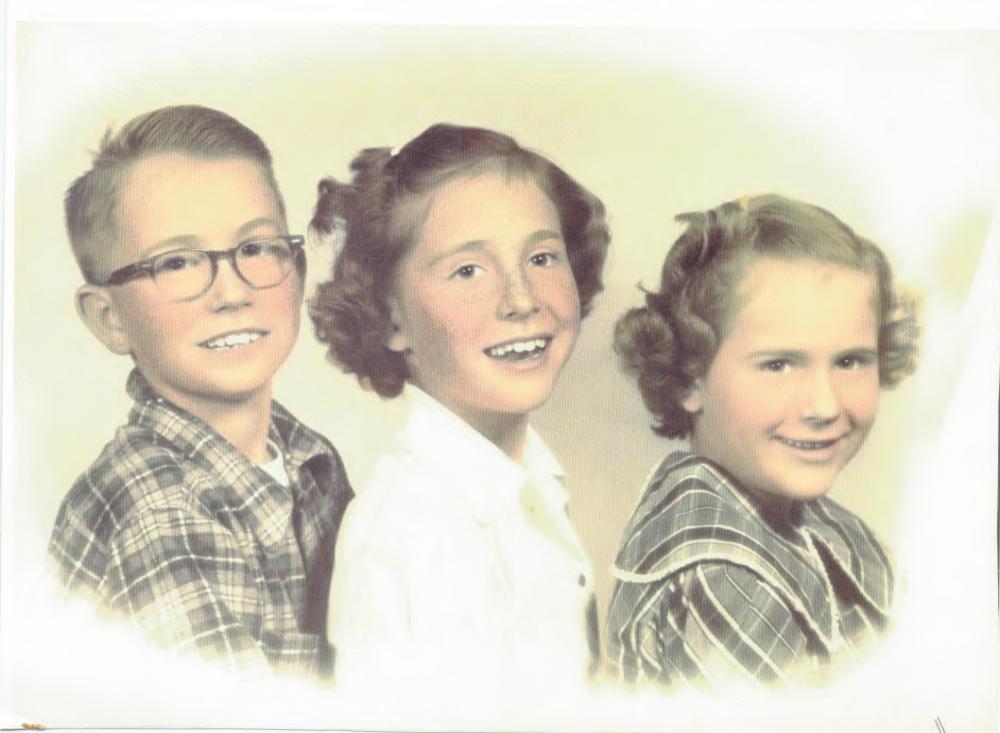
    <summary type="html"><![CDATA[<p><strong><em>"So my parents went from the war to domesticity."</em></strong></p><img src="https://georgiajourneys.kennesaw.edu/files/fullsize/dd5e04e72085361707c7eec5eb4d2b5f.jpg" alt="Wayne, Judy, and Valerie Coker" /><br/><p><span>"Mother and Dad started dating again after the war, and with Grandma Fred’s coaxing and Mother’s proposal they were married and started a family right away. We three children were born two years apart. So my parents went from the war to domesticity. They grew their food in the garden of their four acres of land. They had chickens and a milk cow. My Dad went back to work for the REA (Rural Electric Company), and Mother was a housewife who made most of our clothes."</span></p><p><em><strong><a href="https://georgiajourneys.kennesaw.edu/items/show/540">For more (including 6 images) view the original article</a></strong></em></p>]]></summary>
    <published>2022-05-04T16:12:37+00:00</published>
    <updated>2022-05-18T15:27:54+00:00</updated>
    <link rel="alternate" type="text/html" href="https://georgiajourneys.kennesaw.edu/items/show/540"/>
    <id>https://georgiajourneys.kennesaw.edu/items/show/540</id>
    <author>
      <name>Judy Coker Benowitz</name>
    </author>
  </entry>
  <entry>
    <title type="html"><![CDATA[Coming Home: Exploring Israel and the American South]]></title>
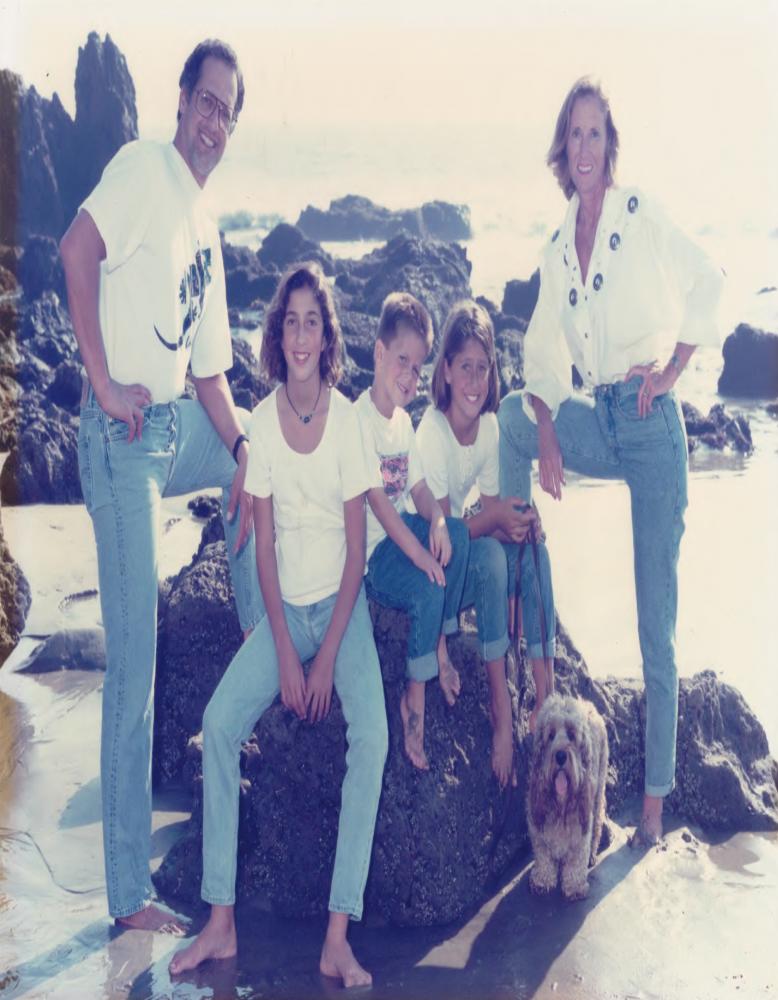
    <summary type="html"><![CDATA[<p><strong><em>"Now it’s my history."</em></strong></p><img src="https://georgiajourneys.kennesaw.edu/files/fullsize/7001a2d43d0ae353f4c8f2b1780a7b12.jpg" alt="Benowitz family on a beach" /><br/><p>"I grew up in the South but I couldn’t wait to get as far away from that Southern lifestyle as I could get. So, I moved to California, lived there twenty years, flew to Honolulu for ten years. Got as far away as I could get. <span>Then Bob’s business brought us back to Georgia for the last seven years of my mother’s life. </span>I knew she was getting on. I wanted my kids to know that side of the family because Bob’s family were all out in California.</p><p>"My husband is Jewish and I converted to Judaism and our children are raised in the faith. All our children spent their tenth grade summers in Israel with the National Federation of Temple Youth as part of their confirmation. They flew into Cyprus and took a rickety boat ride for three days to Israel to reenact the voyage of the famous <i>SS Exodus</i>—the ship carrying Holocaust survivors to Israel which rallied support for the creation of the Jewish state in 1948. My son, who is my youngest, wanted to join the IDF, the Israeli Defense Force. Israeli citizens are required to serve, but they also recruit Americans. I did not want him fighting a war, but instead offered him a study abroad in Israel for five months, where he spent time on a kibbutz teaching immigrants English. I’ve been to Yad Vashem, the Holocaust Museum in Israel, so I am very aware of the Holocaust.
<span>"As I researched my family history in writing my book, “Descendants,” I learned about the enslaved at the Harris House. My first reaction was shock, horror, and shame. Before that I thought the Civil War and slavery was just Georgia history. Now it’s my history. I feel embedded in that history.</span>"</p><p><em><strong><a href="https://georgiajourneys.kennesaw.edu/items/show/539">For more (including 3 images) view the original article</a></strong></em></p>]]></summary>
    <published>2022-05-03T21:00:12+00:00</published>
    <updated>2022-06-02T15:05:37+00:00</updated>
    <link rel="alternate" type="text/html" href="https://georgiajourneys.kennesaw.edu/items/show/539"/>
    <id>https://georgiajourneys.kennesaw.edu/items/show/539</id>
    <author>
      <name>Judy Coker Benowitz</name>
    </author>
  </entry>
  <entry>
    <title type="html"><![CDATA[Home Front: Women at Work]]></title>
    <summary type="html"><![CDATA[<p><strong><em>"A bus would come around and pick up these ladies in town and give them a drive to the cotton mill."</em></strong></p><img src="https://georgiajourneys.kennesaw.edu/files/fullsize/e2da0e4ae0548a95b39bdc6d46a49284.jpg" alt="Monroe Cotton Mill" /><br/><p><div>
<div>
<div>
<div>
<div>
<div>
<div>
<div>
<div>
<div>
<div>
<div>
<div>
<div>
<div>
<div>
<div>
<div>
<div>
<div>
"After my dad’s father died from a measles epidemic, his large family of five siblings and his now single mother Frederica lost her farm during the Depression. During the war, Dad’s sisters went to work. The older sister married and her younger sisters and her mother moved in with her. Frederica went to work in the cotton mill. A bus came by the little town of Monroe every day picking up women, taking them to the cotton mill and then dropping them back home each night." 
</div>
</div>
</div>
</div>
</div>
</div>
</div>
</div>
</div>
</div>
</div>
</div>
</div>
</div>
</div>
</div>
</div>
</div>
</div>
</div>
<em>Editor's Note:</em> Monroe, Georgia, had an operating cotton mill from 1895 through the 1980s. For more on the textile industry in Georgia, see: <a href="https://www.georgiaencyclopedia.org/articles/business-economy/textile-industry/">https://www.georgiaencyclopedia.org/articles/business-economy/textile-industry/</a></p><p><em><strong><a href="https://georgiajourneys.kennesaw.edu/items/show/537">For more view the original article</a></strong></em></p>]]></summary>
    <published>2022-05-03T19:29:51+00:00</published>
    <updated>2022-05-18T15:52:24+00:00</updated>
    <link rel="alternate" type="text/html" href="https://georgiajourneys.kennesaw.edu/items/show/537"/>
    <id>https://georgiajourneys.kennesaw.edu/items/show/537</id>
    <author>
      <name>Judy Coker Benowitz</name>
    </author>
  </entry>
  <entry>
    <title type="html"><![CDATA[Country Roots: Rural Georgia]]></title>
    <summary type="html"><![CDATA[<p><strong><em>"We&#039;ve traced our history back to 1776."</em></strong></p><img src="https://georgiajourneys.kennesaw.edu/files/fullsize/48c21f9f51101e029aeabd0bb222ac72.jpg" alt="William Harris Homestead" /><br/><p>"<span>We descend from one of the largest intact plantations in Georgia: The William Harris Homestead on Highway 11 in Monroe, Georgia. In 1825, my mother’s great grandpa William Harris started the homestead on 500 acres acquired in a treaty with the Creek Indian Nation. Mother’s grandfather John Lewis Harris was the last occupant of the log cabin. He died in 1929.</span>
<span>"The Harrises were prodigious: William had fifteen children, and John Lewis had thirteen. Over many years of the twentieth century Hubert Harris, grandson of William, acquired the property and continued farming the land. In 1986 the Hubert Harris family listed the property on the National Register of Historic Places.</span>
"<span>We’ve traced our history back to 1776. The Harris family has been in this country since the beginning. The Civil War and slavery are part of Georgia history, and sadly, part of my history, too. Today the Homestead is a museum and educational site using archaeology to learn more about that time 200 years ago.</span>
"<span>My dad was a blue collar worker. Mother made most of my clothes. For Christmas we always got socks and underwear. Our summertime job was picking cotton. It was very rural, southern living.</span>"</p><p><em><strong><a href="https://georgiajourneys.kennesaw.edu/items/show/530">For more (including 2 images) view the original article</a></strong></em></p>]]></summary>
    <published>2022-05-02T18:44:05+00:00</published>
    <updated>2022-06-02T15:03:41+00:00</updated>
    <link rel="alternate" type="text/html" href="https://georgiajourneys.kennesaw.edu/items/show/530"/>
    <id>https://georgiajourneys.kennesaw.edu/items/show/530</id>
    <author>
      <name>Judy Coker Benowitz</name>
    </author>
  </entry>
</feed>